Fauxpersky Keylogger Malware Stealing Passwords from Windows PCs

Cybercriminals are quite innovative, to be honest; they are always coming up with unique ways of exploiting Windows-based systems. According to the findings of Boston-based cyber-security firm Cybereason, one of their newly identified techniques involves using keylogger malware that exploits AutoIT or AutoHotKey (AHK).
Fauxpersky Malware Spreads via malicious USB drives

The malware, dubbed by Cybereason researchers as Fauxpersky, is though not as sophisticated as some of the recently discovered malware but it can efficiently steal passwords from Windows systems. It is spread via infected USB drives.

https://www.hackread.com/fauxpersky-keylogger-malware-stealing-windows-passwords/

How to Accidentally Stop a Global Cyber Attacks

A fresh wave of infected emails is swirling around the globe, carrying a nasty ransomware payload.

So finally I’ve found enough time between emails and Skype calls to write up on the crazy events which occurred over Friday, which was supposed to be part of my week off (I made it a total of 4 days without working, so there’s that). You’ve probably read about the WannaCrypt fiasco on several news sites, but I figured I’d tell my story.

https://www.malwaretech.com/2017/05/how-to-accidentally-stop-a-global-cyber-attack

Nasty Trojan Spreads Global Ransomware via Email

A fresh wave of infected emails is swirling around the globe, carrying a nasty ransomware payload.

ESET is warning of an increased number of infected emails containing a malicious attachment, which downloads and installs ransomware onto an infected device. ESET telemetry detects this malicious downloader as JS/TrojanDownloader.Nemucod and records its unusually high incidence in Europe, North America (especially Canada), Australia and Japan.
http://www.infosecurity-magazine.com/news/nasty-trojan-spreads-global/?utm_content=bufferc86f5&utm_medium=social&utm_source=linkedin.com&utm_campaign=buffer

4 ways marketers can seize ‘mobile moments’

A mobile user’s entire app journey can happen in a matter of moments — sometimes in less than a minute. Think about this scenario: You’re commuting, reading an article about a new cruise. Curious, you search for the company mentioned, and soon enough you’re emailing to receive more information and potentially plan your trip.

http://mashable.com/2015/08/20/seizing-mobile-moments/

Banking apps on Android phones most at risk of virus: Kaspersky

http://www.reuters.com/article/2014/01/27/us-kaspersky-cyber-idUSBREA0Q12620140127?_php=true&_type=blogs&_r=0

Banking applications on Android phones are most vulnerable to cyber crime, the chief executive and co-founder of Russian anti-virus software maker Kaspersky Lab said on Monday.

New Book: The Interest Rate Solution, Details How Homeowners Can Save 23% and More Mortgage Interest Rate Costs, by Vision Publishing Group

New Book: The Interest Rate Solution, Details How Homeowners Can Save 23% and More Mortgage Interest Rate Costs.

2013 PREDICTIONS: Security Threats to Business, the Digital Lifestyle, and the Cloud

At Trend Micro CTO, the research team has once again evaluated 2012 risks and compiled the top threats for mid-sized firms in 2013. This assessment leverages the analyses of 1,000 threat researchers across the globe at Trend Micro. In 2013, managing device security, systems and networks will be more complex than ever before for mid-sized firms.

Organizations require a custom defense to protect intellectual property and business information as they embrace consumerization, virtualization, and cloud platforms. Cybercriminals and other threat actors will capitalize on risks to gain profit, steal information, and sabotage operations. Medium businesses are not immune and have assets and intellectual property hackers desire.
Here’s a sneak peek at a few of the threat predictions for 2013:

• Targeted attacks increase in sophistication.
• Volume of malicious Android apps hit 1 Million.
• Data breaches will remain a risk.
• Security threats will arise in unexpected places.

READ ALL 10 PREDICTIONS FOR 2013

A new targeted Trojan, Batchwiper, wipes data from drives

Moriah Sargent, Contributor Published: 17 Dec 2012

A targeted data wiping malware has been discovered by The Iran National CERT, or Maher. The malware, referred to as Batchwiper by Cupertino, Calif.-based security vendor Symantec Corp., wipes files on different drives at predefined times.

Researchers say the design is primitive but the malware is efficient. Batchwiper can wipe disk partitions and user profile directories without being recognized by anti-virus software. It is not widely distributed.

Symantec has recovered samples of the Trojan matching the hashes in the Maher advisory. According to Symantec, the samples will wipe any drives starting with the drive letters D through I, along with files on a logged-in user’s Desktop. Symantec researchers are continuing to analyze the binaries.

Targeted malware attacks have been on the rise in recent years. Batchwiper, however, shows no similarities to more sophisticated targeted attacks like Stuxnet, Flame or Gauss. Experts say companies need to make malware defense a top priority. Steps IT teams can take to protect their companies against malware include offline malware and threat detection, whitelisting, and browser security.


http://searchsecurity.techtarget.com/news/2240174928/A-new-targeted-Trojan-Batchwiper-wipes-data-from-drives

10 Simple Tips For Effective Mobile SEO

Sep 10, 2012 at 11:33am ET by

  • inShare99

There is little doubt that mobile search is the hot topic in the SEO world at the moment. Some brands are now finding that more than 30 percent of all searches come from mobile devices, according to Mobile Marketer. It’s fair to say that mobile search is quickly moving out of the Stone Age and into the digital age.

That’s the premise of a new insight paper, Mobile SEO Best Practices, published recently by my company, MediaWhiz (disclosure: I lead MediaWhiz’s search marketing and digital strategy divisions). In addition to a list of our top-10 tips for effective mobile SEO, the paper offers marketers a step-by-step guide to delivering effective mobile search campaigns.

The tips range from the simple (e.g., understanding the differences in how people search on mobile devices compared to their searches on desktops) to the complex, such as best practices to ensure a site’s mobile content can be properly viewed and crawled by search engines.

Below are my top-10 tips for effective mobile SEO. What are yours? Share your tips in the comments section.

1.  Be A Search Psychologist

Searchers using mobile devices enter keyword queries differently than they do with desktop applications. They use shorter tail phrases.

Often, their searches are more local in nature and more prone to rely on Google’s Autocomplete feature complete a query. When optimizing meta title and descriptions, it is important to optimize for these shorter tail queries.

2.  Think Social-first, Mobile-second

Mobile users tend to want to be “entertained,” and in many instances, they are connected 24/7 to their social media networks via apps. Content displayed for mobile users should be “entertaining.” When developing online content, think social-first, mobile-second.

Mobile sites should have social media links embedded on every page, as many smartphone users are connected to their social networks 24/7. Doing so will increase exposure, traffic and engagement by ensuring content is easily shared across social networks.

The examples below from Macy’s and Tiffany’s show how a social-first, mobile-second mindset with site design leads to more visually appealing mobile sites.

3.  Know Where Mobile Searches Are Going

When optimizing webpages for mobile, ensure that the user agent for both searchers and for the search engine bots are going to the same version of the webpage. Don’t inadvertently get a site flagged for cloaking.

4.  Size Matters

Mobile devices typically have touchscreens, and pressing a navigation link can be cumbersome. It’s important to streamline the navigation so users focus on the most important and/or most popular pages of a site.

Web developers should consider vertical menus. These are typically easier for users to maneuver when deciding which link to click on. In the example below, the Toys “R” Us mobile site utilizes vertical menus to optimal effect.

5.  Develop To Scale; Don’t Scale To Fit

A successful mobile strategy includes developing a revamped site specific for mobile search. It should not merely be a scaled-down version of the desktop website, retrofitted for a smaller screen. Preferably webservers should be configured so that the mobile version of the site resides on a sub-domain leading with the “m.yourdomain.com.”

Many of the highest trafficked websites, and those that set the standards for best practices concerning user experience, have fully developed mobile versions of their websites to ensure mobile users get the best experience possible.

A good example of this is Twitter’s mobile site:

6.  Link Location Matters

Each mobile-friendly page should have a link to the main desktop site — clearly marked — so access to the full site is not limited.

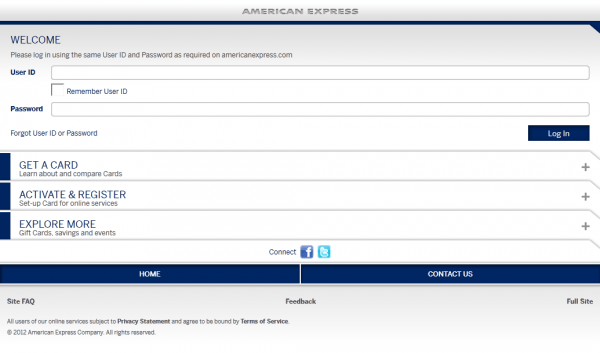
Example #1: The American Express website detects a mobile user agent and displays the mobile version of its site for best user experience. However, there is a link located at the bottom-right corner of the mobile site that allows users to change the user agent to the desktop version of the site.
Example #2: Subway has a link to “view full site” so users can easily and quickly switch to the version of the site that best fits their needs and device.

7.  Don’t Forget The Click-to-Call

Make it easy for customers to call you directly from your mobile site. Each mobile-friendly page should have the phone number predominately displayed with easy click-to-call access embedded in every page, as seen in the GoDaddy.com mobile site below.

8.  Use Rich Content Sparingly

Webpages with rich content (images and videos) are difficult to load on mobile operating systems. Reducing file sizes of rich content ensures those pages render properly on users’ mobile devices and give this highly sharable content better visibility.

A company whose mobile site effectively displays rich content without requiring long loading times is Coca-Cola:

9.  Apps vs. Mobile-Friendly: Intent Matters

When deciding on application development versus mobile-friendly webpages, remember the intent of someone visiting a website versus using an application.

Applications are for resources that a person will use multiple times. The intent is that an application is either a resource or a business tool (e.g., mobile banking apps versus visiting a bank’s mobile website to learn more about home mortgage loan services).

For companies like Bank of America, which operate almost entirely on a transactional basis with their customers, a mobile app makes sense. For many companies, an app simply won’t be relevant or effective for their customers or business needs.

10.  Embrace Search Engine Crawlers

Search engines understand that the mobile-friendly versions of your webpages are just that and not duplicitous content that could penalize your brand’s search rankings. Make sure search engines’ mobile content crawlers are directed (via setting the user agent) to the same mobile version that users are sent to. Doing so avoids content and penalties, such as cloaking.

Bonus Tip

Remember the primary reason consumers use mobile devices. Studies show that approximately 85 percent of people use mobile devices to “pass time,” “be amused” or for “entertainment reasons.” Develop mobile versions of your website with these aspects in mind for full engagement value.

Special thanks to Heather Fernandez, senior SEO strategist at MediaWhiz, who also contributed to this article. As a reminder, you can download a copy of MediaWhiz’s insight paper mentioned above “Mobile SEO Best Practices”,  here

Opinions expressed in the article are those of the guest author and not necessarily Search Engine Land.

Register for the Webcast

Sophos Sophos Products Security News/Trends
Malware from B to ZMalware from B to Z : Inside the threat from Blackhole to ZeroAccess

Available Continuosly

Register Now

Drive-by downloads on the web are nothing new—these attacks exploit a user’s browser to distribute malware and steal data.  The most popular drive-by malware we’ve seen recently is called Blackhole. It’s a crimeware kit that allows cybercriminals to deliver malicious code and carry out sophisticated attacks like the ZeroAccess threat – a kernel-mode rootkit.

Join Richard Wang, Director of Threat Research at SophosLabs to learn how hackers are using Blackhole and ZeroAccess together to compromise your security. Richard will discuss the following:

  • How these threats work from compromised site to infection
  • How crimeware kits are developed, bought and sold
  • The money behind this malware
  • Protecting against these types of attacks

Register for this informative webcast today

Webinars for General Audiences
Attend a webinar

Register for the General Audience webcasts today